
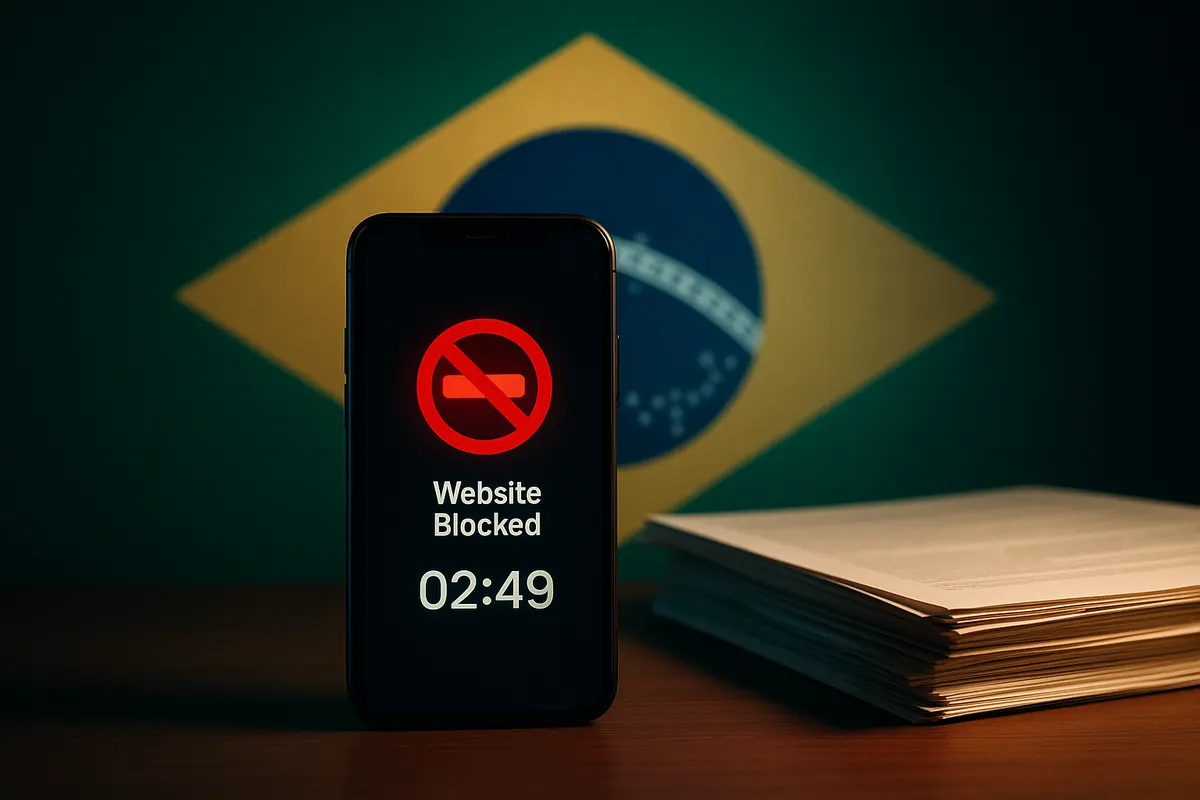
A 74% jump, and what that number actually counts
Seventy-four percent. That is how much the population of illegal betting operators serving Brazilian players grew after President Lula signed his latest gambling decree, according to trade press reporting at the end of September. Not 74% more advertising spend, not 74% more complaints — 74% more operators. The Brazil betting decree was written to tighten the regulated market. The immediate measurable effect was a boom on the other side of the fence.
That is worth sitting with for a second, because it is the single most useful fact in this story and also the most frequently misread one. A rise in detected illegal operators is not proof that regulation failed. It can equally mean the regulator finally started counting properly, or that blocking a domain simply produces three mirrors by Friday. Both things are true in most regulated markets. What it does tell you is that the gap between the legal product and the grey one is now wide enough to be commercially interesting to someone.
What a decree can and cannot do in Brazil
A presidential decree in Brazil is a regulatory instrument, not a new law. It fills in, sharpens and sequences what Congress already passed — in this case Law 14.790/2023, which legalised fixed-odds betting and online casino games and set up the licensing regime that went live at the start of 2025. A decree can hand agencies clearer enforcement powers, set compliance windows, tighten rules on advertising and payments, and instruct the state machinery to move faster. It cannot invent a new tax or rewrite the statute underneath it.
So when you read that a decree is “reshaping” the market, translate it into something more modest and more practical: the rules did not change direction, they got a deadline attached. The part that matters to an operator is the calendar. The part that matters to a player is which sites are still standing when the calendar runs out.
If you want the precise wording of what was signed, the authoritative text is the version published in the Diário Oficial da União, with the implementing detail handled by the Ministry of Finance’s betting secretariat. Secondary summaries, this one included, are not a substitute for the official text.
Following one search, end to end
Take an ordinary case. A bettor in Recife — call him Diego, because every example needs a name — wants to put R$50 on a Brasileirão match. He types the brand he remembers from a shirt sponsorship two seasons ago into his phone. Here is roughly what happens next, and every step of it is a lesson about the decree.
Step one: the domain doesn’t resolve. Licensed operators in Brazil have to run on a bet.br domain. The old .com he remembers is either redirecting, dead, or has been handed to the regulator’s blocking list and passed to Anatel, the telecoms agency, for ISP-level blocking. Diego sees an error page and assumes the brand has gone bust. It hasn’t; it has moved, or it never got licensed.
Step two: search gives him a near-identical alternative. This is where the 74% lives. Blocking is a game of whack-a-mole: a domain goes down, a visually identical mirror goes up, often with the same logo, same Portuguese, same PIX button. Nothing on the surface tells Diego he has crossed a legal line. The giveaway is structural, not cosmetic — the domain, the published licence, the KYC flow.
Step three: the sign-up is suspiciously easy. A licensed Brazilian site puts him through identity verification, including facial recognition, checks his CPF, and refuses the account outright if he is a social benefit recipient barred from betting under the rules. The mirror asks for an email. People read friction as bad design. In a regulated market, friction is the product working.
Step four: the payment method is the tell. Under Brazil’s rules, money has to move by electronic transfer from an account in the bettor’s own name, with credit cards off the table. If a site cheerfully offers him a credit card, a cash voucher, a crypto wallet or a transfer from his cousin’s account, he is not on a licensed site. That single check filters out most of the grey market in about four seconds.
Step five: he wins, and then the problem starts. This is the step nobody thinks about at sign-up. On a licensed operator, a withheld withdrawal is a complaint with a named regulator, a registered company, and a Brazilian consumer law framework behind it. On the mirror, Diego’s recourse is a support chat that may or may not reply. His net winnings are taxable either way; his ability to prove what he is owed is not.
Licensed site versus offshore mirror: the checks that actually separate them
The practical differences are not about odds or bonus size. They are about what exists behind the website.
| Check | Licensed Brazilian operator | Unlicensed / mirror site |
|---|---|---|
| Domain | Ends in bet.br | .com, .net, regional variants, numbered mirrors |
| Authorisation | Listed by the federal betting secretariat; licence paid for a five-year term | No listing, or a licence from an unrelated jurisdiction |
| Identity checks | CPF plus facial recognition; barred groups blocked | Email sign-up, little or no verification |
| Payments | Transfers from an account in the bettor’s own name; no credit cards | Cards, crypto, third-party transfers accepted |
| If something goes wrong | Regulator and Brazilian consumer law | Support ticket and hope |
| Continuity risk | Stable unless the licence is lost | Can be blocked or vanish without notice, with balances inside |
Why operators are watching the calendar, not the politics
For licensed companies, the cost base in Brazil was already heavy before this decree. A federal authorisation runs R$30 million for five years and covers up to three brands, and gross gaming revenue is taxed at 12% on top of ordinary corporate taxes. Add mandatory responsible gambling tooling, advertising restrictions, payment limitations and the technical cost of local hosting and reporting, and the regulated operator is carrying an overhead that an offshore mirror simply does not pay.
That asymmetry is the whole story of the 74%. Every compliance obligation added to the licensed side widens the margin advantage of the unlicensed side, unless enforcement widens at the same rate. A decree that sets deadlines without resourcing blocking, payment interdiction and advertising takedowns transfers market share rather than shrinking it. Operators who have already written the R$30 million cheque are, understandably, loud about this.
The approaching deadline matters because compliance windows in Brazil have teeth attached to the licence rather than to a fine. Miss the window and the question is not “how much is the penalty” but “do we still have a bet.br domain next month”. That is why legal and compliance teams across São Paulo spent the autumn reading a short administrative document extremely slowly.
What it changes for the person actually placing the bet
Honestly? Less than the headlines suggest, provided you stay on the licensed list. The regulated product in Brazil is the same sportsbook and casino content it was before, with more verification at the door and fewer payment options. The real change is that the grey market has grown, it looks more convincing than it used to, and it is now easier to land on by accident than by choice.
Three habits cover most of the risk. Check the domain ends in bet.br before depositing. Refuse any site that will take a credit card or a third-party transfer, because that is not a licensed Brazilian operator regardless of what the footer claims. And treat an unusually generous bonus on an unfamiliar brand as information about the brand rather than about your luck.
One thing the decree does not change, and no decree ever will: the maths. Every sportsbook price carries a margin and every casino game carries a house edge, which is why the industry is taxed at 12% of gross gaming revenue in the first place — there is a revenue there to tax. Regulation can make the operator accountable and the withdrawal reliable. It cannot make the long-run return positive. Set a deposit limit, use the self-exclusion tools the licensed sites are required to offer, and if betting has stopped being entertainment, step away and seek support.
Frequently asked questions
What is the Brazil betting decree?
It is a presidential decree signed by Lula that implements and tightens the rules under Brazil’s fixed-odds betting law, Law 14.790/2023. It does not replace that law; it sharpens enforcement and attaches compliance deadlines for licensed operators.
Why did illegal operators increase by 74%?
Trade reporting recorded a 74% rise in illegal operators after the decree. The likely drivers are a mix of better detection, blocked domains reappearing as mirrors, and a widening cost gap between heavily taxed licensed operators and offshore sites that pay nothing.
How do I tell if a Brazilian betting site is legal?
Look for a bet.br domain, confirm the brand appears on the federal betting secretariat’s list of authorised operators, and check that the site insists on CPF and facial verification and refuses credit cards or third-party payments.
Is betting still legal in Brazil?
Yes. Licensed fixed-odds sports betting and online casino games have been legal since the regulated market opened at the start of 2025. The decree targets how that market operates and how unlicensed operators are pursued, not the legality of betting itself.


Leave a Reply