
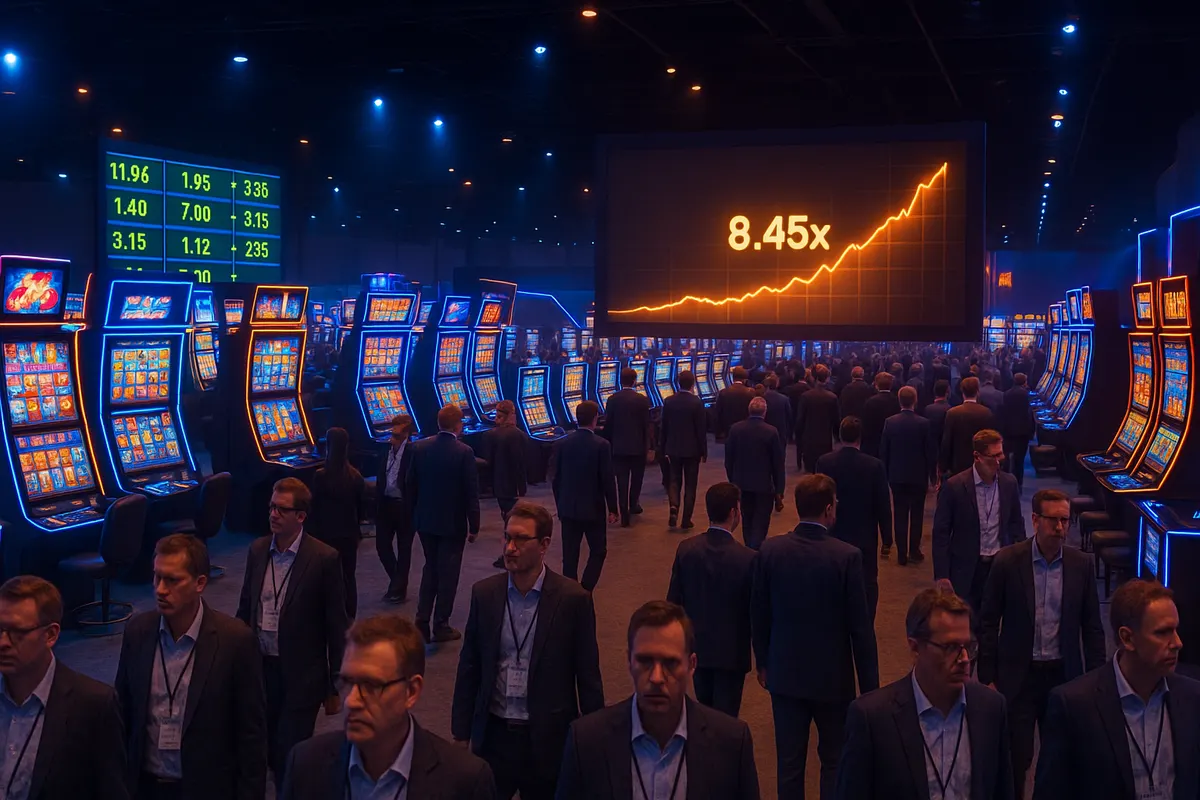
A trade show is a shopping trip. This one is a map of your next five years of play
The Global Gaming Expo is where casino operators go to buy things. That is the simple definition, and it is also where it stops being simple: the G2E gaming technology on display this week is not just cabinets and cocktail terminals, it is the plumbing of how you will deposit money, how your lobby will be arranged, and whether the thing you place on Sunday’s game is legally a bet at all.
G2E 2026 opened its exhibition floor on Tuesday, September 29, at The Venetian Expo in Las Vegas and runs through October 1. Presented by the American Gaming Association and organised by RX, it has drawn more than 25,000 gaming professionals and over 400 exhibitors, with attendees expected from more than 120 countries, regions and territories. Education sessions started Monday; the floor itself opened at 10 a.m. Tuesday. Exhibits span casino gaming, iGaming, sports betting, payments, hospitality and business technology.
Three themes dominate the programme: prediction markets, artificial intelligence, and the tightening relationship between gaming and sport. Only one of them is an actual fight.
The problem: nobody can agree what counts as a bet
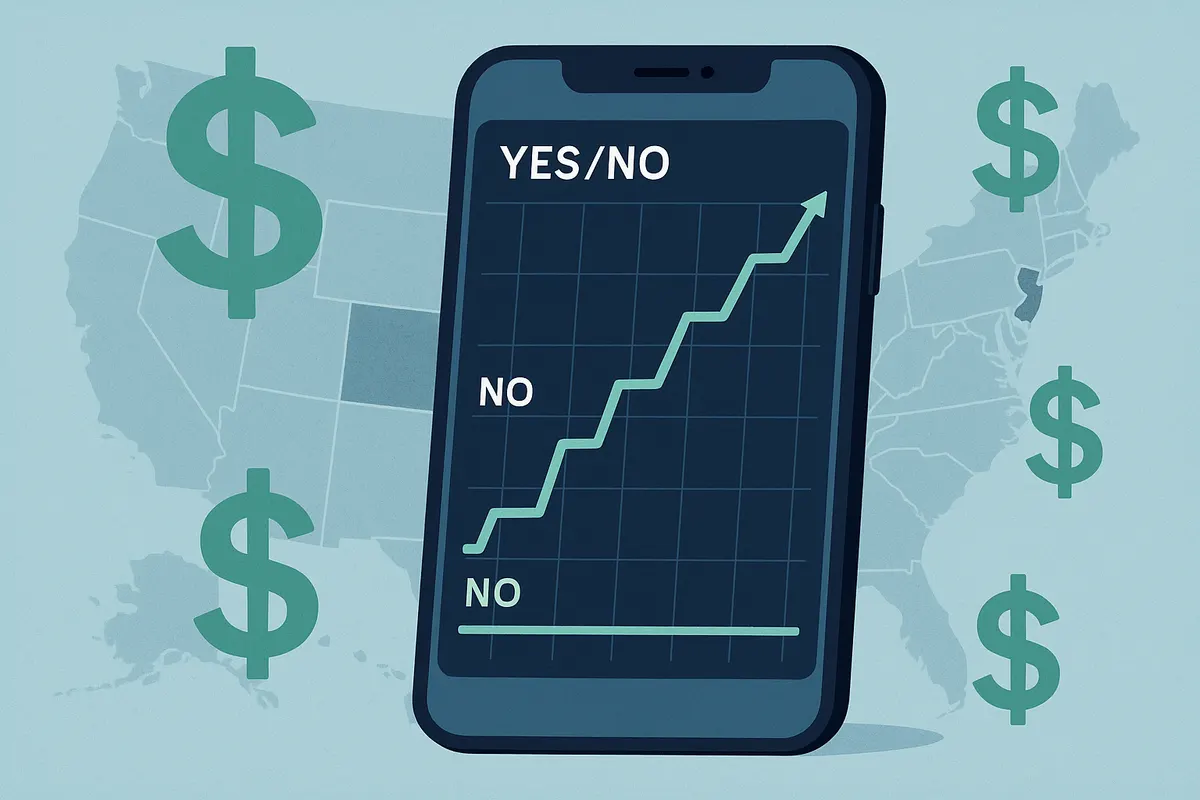
The most closely watched issue at this year’s expo is the growth of prediction markets in the US sports betting landscape. These are platforms where you buy and sell contracts on the outcome of an event, often at a price between zero and one dollar that moves with the crowd’s opinion. If you squint, that is trading. If you don’t squint at all, it is a wager on a football game.
Nevada regulators have taken the unsquinting view, arguing that prediction-market operators are offering sports betting without complying with the state’s gaming framework. Kalshi, one of the largest US prediction-market operators, is not exhibiting at G2E, which has not stopped its business model and the surrounding regulatory dispute from becoming one of the loudest conversations at the event.
It is also baked into the official programme. A Main Stage session called “The Power of Unity: Confronting the Prediction Markets Challenge” brings tribal gaming representatives together over concerns about jurisdiction and the potential effect on tribal gaming. When tribal operators and state regulators end up on the same side of an argument, you are not looking at a product trend. You are looking at a threat to the licensing model that the whole industry is built on.
Why the dispute got this far
The cause is a regulatory seam. Licensed sportsbooks are approved state by state, pay state gaming taxes, and sit inside rules on geofencing, advertising, age verification and responsible gambling. Event contracts have been offered under a federal commodities framework instead, which is a different regulator with a different rulebook written for markets, not for casinos. Same economic activity, two legal identities. Everything else, including the current litigation and lobbying, follows from that gap.
Here is the practical difference for someone deciding where to put money:
| Prediction market contract | Licensed sportsbook bet | |
|---|---|---|
| Who sets the price | Other users, via an order book | The bookmaker, with a built-in margin |
| How the operator earns | Typically fees or commission on trades | The overround priced into the odds |
| Regulator | Federal commodities regulation (disputed by states) | State gaming regulator, licence by licence |
| Gaming-specific player protections | Not built on casino rules; varies by platform | Mandated: age checks, self-exclusion, limits |
| Can you exit before the result | Yes, by selling the contract at the live price | Only if the book offers a cash-out |
Neither column is a route to free money. A peer-priced market still takes a cut, and an order book full of confident strangers is not a softer opponent than a bookmaker’s margin. The real difference is the protections wrapped around the product, and that is exactly what the G2E panels are arguing about.
AI in casinos: personalisation is the sales pitch, compliance is the real product
Artificial intelligence is the other headline theme, and on a trade show floor it is sold as personalisation. Smarter lobbies that surface the games you actually play. Offers timed to your habits. Live chat that answers before a human reads the ticket. Floor layouts for land-based venues decided by foot-traffic data rather than a manager’s hunch.
Strip away the vendor language and most of what operators are actually buying falls into three buckets: marketing automation, fraud and payments screening, and behavioural monitoring for responsible gambling and anti-money-laundering duties. The last one is why AI keeps selling. Regulators in several markets now expect operators to spot harmful patterns early, and no compliance team reviews millions of sessions by hand.
What AI does not do is change the maths. A personalised lobby cannot alter a slot’s RTP, and a model that knows you like high volatility games does not change the house edge on any of them. A 96% RTP game is still a 4% house edge whether an algorithm picked it for you or you found it yourself. Treat any pitch that blurs that line with suspicion.
The honest upside for players is friction removal: faster verification, fewer wrongly frozen withdrawals, better fraud catches. The honest downside is that the same engine that spots a problem gambler can also time a reload offer for the moment you are most likely to accept one. Which of those a given operator optimises for tells you most of what you need to know about them.
New casino technology trends worth watching on the floor
Beyond the two headline themes, the exhibitor mix at G2E tracks where development money is going. Payments is the big one. Cashless and account-based wagering keeps expanding in land-based venues, and the same infrastructure push shows up online as faster rails and tighter identity checks. For players, cashless cuts the trip to the ATM, which is convenient and also removes a natural stopping point, so venue-level limits and tracking tools matter more, not less.
Hardware is the visible half. Cabinets keep getting larger screens, more tactile controls and mechanics borrowed from video games, which is a deliberate play for younger players who grew up with skill-based input rather than a spin button. Expect more hybrid formats, more linked progressives, and more content that behaves like a slot but looks like an arcade.
Then there is the gaming-and-sport convergence running through the programme: sportsbook content inside casino apps, casino content inside sportsbook apps, and live studios producing games built for second-screen viewing. The commercial logic is obvious. One account, two habits.
How to read any of this as a player
Trade show announcements reach your account months or years later, and usually in smaller form than the keynote promised. A short filter helps:
- Check who licenses it. If a product’s legal status is being argued about by regulators, your dispute options are argued about too. Know which authority you would complain to before you deposit.
- Read the terms, not the interface. Slicker apps have not made wagering requirements gentler. A 30x requirement on a ₹1,000 bonus is still ₹30,000 of turnover, and game weighting decides how long that takes.
- Ask what the maths is. RTP, volatility and overround are the only numbers that describe your long-run position. New hardware and AI recommendations do not move them.
- Use the tools that come with the tech. Deposit, loss and session limits, reality checks and self-exclusion are standard at licensed operators. Cashless play makes them more useful, not redundant.
- Be sceptical of “personalised” value. A targeted offer is targeted because it works on people like you. That is not the same as being good for you.
Common questions about G2E 2026
When and where is G2E 2026?
G2E 2026 runs from September 29 to October 1 at The Venetian Expo in Las Vegas. Education sessions began Monday, September 28, and the exhibition floor opened at 10 a.m. on Tuesday, September 29. Details are published by the Global Gaming Expo organisers.
How big is the Global Gaming Expo in Las Vegas?
This edition brought together more than 25,000 gaming professionals and more than 400 exhibitors, with attendees expected from over 120 countries, regions and territories. It is presented by the American Gaming Association and organised by RX.
Why are prediction markets controversial at G2E?
Because they look like sports betting without carrying a state gaming licence. Nevada regulators have argued prediction-market operators are offering sports betting outside the state’s gaming framework, and tribal gaming representatives are discussing jurisdiction and the potential impact on their operations in a Main Stage session titled “The Power of Unity: Confronting the Prediction Markets Challenge.”
Will AI make online casino games fairer or better value?
No. AI affects how games are presented, marketed and monitored, not the outcomes. Results still come from certified RNGs, and the return to player and house edge are fixed by game design.
The thread running through G2E 2026 is that the industry is spending its money on distribution and data rather than on better odds. That is worth knowing. Gambling carries a built-in house edge and no technology on that floor removes it, so play with money you can afford to lose, set limits before you start, and use self-exclusion or a support service if it stops being entertainment. Players under the legal age in their jurisdiction should not gamble at all.
Leave a Reply