
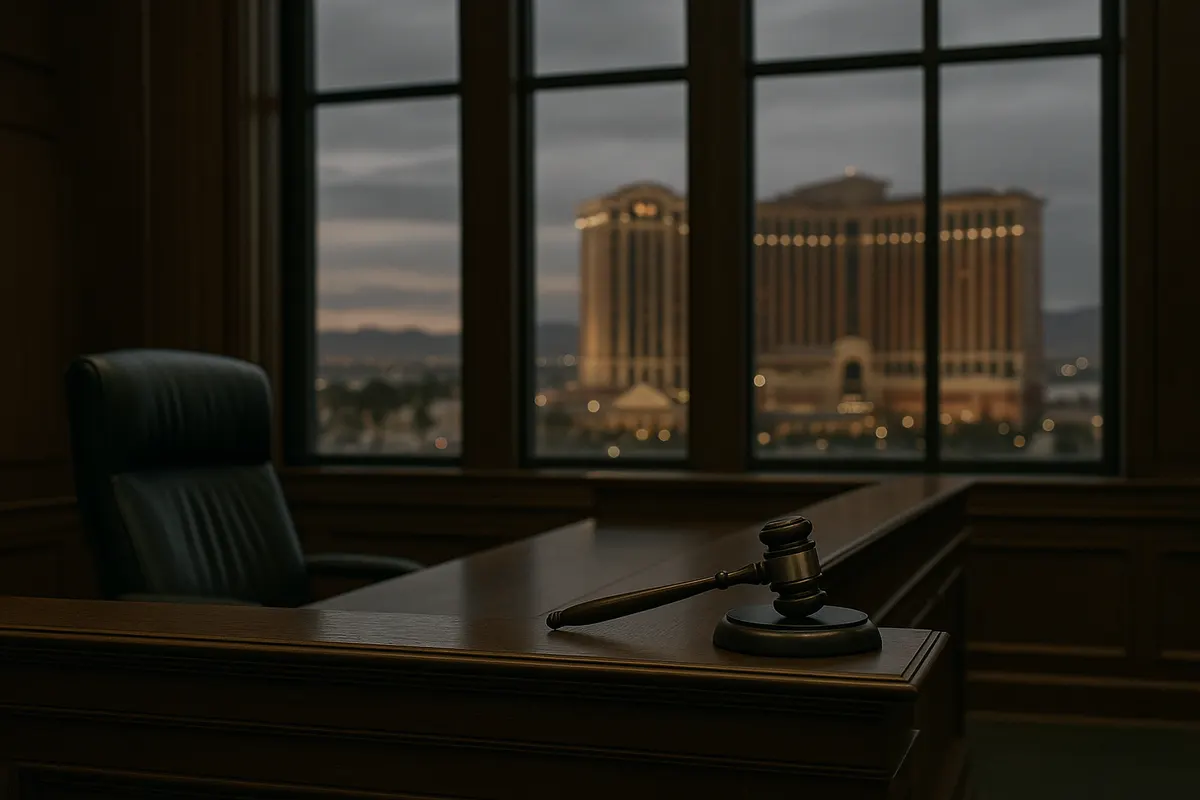
What do you do when you don’t like the referee? Sue the league
That, stripped of the legal Latin, was the strategy behind the Red Rock Resorts lawsuit against the National Labor Relations Board. Facing two active federal labor proceedings over how it handled union organizing at its Las Vegas properties, the company didn’t go to court to argue it had done nothing wrong. It went to court to argue the agency hearing the case shouldn’t legally exist in its current form.
US District Judge Anne Traum wasn’t persuaded. She dismissed the suit, filed by Red Rock Resorts, its Station Casinos brand and a long list of affiliated casino entities, and the underlying labor cases keep moving. The dismissal was without prejudice, so Red Rock can amend its complaint and try again. For now, though, a legal manoeuvre that had been running since October 2024 has produced nothing but delay.
Start at the ballot box: Red Rock, 2019
To understand why this matters, follow one thread from the beginning.
In 2019, workers at Red Rock Casino Resort voted on whether to join the Culinary Workers Union. The union lost, 54% to 46%. On paper, that settles it. In labor law, it doesn’t, because how you get to a result matters as much as the result.
An NLRB administrative law judge later found that Station had improperly influenced the vote by announcing enhanced employee benefits in the run-up to the election, then warning employees those benefits could disappear if the union won. Carrot, then stick, both timed to the ballot. Under federal labor law, that’s not persuasion, it’s interference.
In 2024 the Board upheld those findings and ordered the casino to recognize and bargain with the union anyway, election result notwithstanding. That remedy, a bargaining order imposed over a losing vote, is about as serious as it gets short of rerunning the whole election. It is also the single fact that explains why Red Rock has fought so hard in federal court.
The wider complaint: layoffs during the pandemic
The Red Rock vote is only one front. The dispute between Station Casinos and organized labor in Las Vegas dates to 2018, when the NLRB opened the first of many proceedings arising from unfair labor practice complaints.
The big one landed in 2021. The agency issued a comprehensive complaint alleging that Station used pandemic-era workforce reductions and rehiring decisions as a tool against union support. The specifics, as alleged: selectively laying off, recalling, rehiring and transferring employees in ways that thinned union representation; encouraging decertification efforts at certain properties; and rewarding workers who opposed unionization.
Station denied all of it and accused the NLRB of biased treatment. That accusation is worth noting, because it’s the seed of the constitutional argument that followed.
The constitutional gambit
In October 2024, with the labor proceedings still live, Red Rock opened a second front. Instead of litigating whether the layoffs and benefit announcements broke the law, the company argued that the National Labor Relations Board itself is unconstitutionally structured.
Two main claims:
- Removal protections. Federal law makes it too hard for the President to remove NLRB board members and administrative law judges, the company argued, which improperly fences off executive authority.
- Blended powers. The agency investigates alleged violations, prosecutes them, and then adjudicates them. Red Rock called that combination unconstitutional, prosecutor and judge under one roof.
Neither argument is unique to casinos. Versions of both have been pressed by employers in other industries. Red Rock simply brought a gaming company’s resources to the fight, first seeking a preliminary injunction to freeze the labor cases while the constitutional question was sorted out.
Judge Traum denied that injunction in September 2025. Red Rock appealed to the Ninth Circuit. Then came the dismissal of the underlying suit.
Why the case failed on plumbing, not principle
Here’s the part worth reading closely, because the judge didn’t rule that the NLRB’s structure is fine. She ruled that Red Rock hadn’t shown the structure caused it any direct injury.
And she made a second point that does real damage to the strategy: even if the removal restrictions on NLRB officials were found unconstitutional, that finding wouldn’t automatically void decisions made by officials who were lawfully appointed in the first place. In other words, win the abstract argument and you may still be stuck with the bargaining order.
That is a standing-and-remedy problem, not a merits problem. It’s also the reason the dismissal came without prejudice. Red Rock gets another go if it can plead a concrete, traceable injury.
How the fight has unfolded
| Year | Development |
|---|---|
| 2018 | NLRB opens the first of multiple proceedings against Station Casinos over unfair labor practice complaints |
| 2019 | Red Rock Casino Resort workers vote 54%–46% against union representation |
| 2021 | NLRB issues a comprehensive complaint alleging pandemic layoffs and rehiring were used to weaken union support |
| 2024 | NLRB upholds findings against Red Rock and orders the casino to recognize and bargain with the union |
| Oct 2024 | Red Rock Resorts files its constitutional challenge to the NLRB |
| Sep 2025 | Judge Traum denies a preliminary injunction; Red Rock appeals to the Ninth Circuit |
| Latest | Judge Traum dismisses the lawsuit without prejudice; labor proceedings continue |
What this tells you about casino company litigation
Gaming operators live under more regulators than almost any other consumer business: state gaming control boards, tribal and federal authorities, tax agencies, financial-crime supervisors, and in employment matters the same labor regulators as everyone else. Red Rock Resorts is the Station Casinos parent and one of the biggest names in the Las Vegas locals market, which makes this a useful case study in how that stack behaves under pressure.
Three things stand out from this casino operator legal dispute.
First, a constitutional challenge is a slow instrument. Seven years after the first NLRB proceeding, the labor allegations still haven’t been resolved on their merits, and the detour through federal court has not stopped them.
Second, licensing bodies read court dockets. Nevada regulators assess suitability on an ongoing basis, and a long record of findings against an operator, labor or otherwise, becomes part of the file a company carries into every future application. That’s the quiet cost of a protracted fight.
Third, for anyone tracking Nevada casino legal news as an investor or an industry watcher, an unresolved bargaining order is a live operational question, not a footnote. Recognizing and bargaining with a union changes cost structures at properties built on a locals-market model with thin margins per customer.
What happens next
Three paths run in parallel. The NLRB proceedings continue. The Ninth Circuit appeal over the denied injunction remains in play. And Red Rock can rewrite its complaint and refile, this time with a sharper theory of injury.
None of those paths ends quickly. The honest read on this red rock resorts court ruling is that it changes the odds rather than the outcome: the company’s fastest route out of the labor cases is now closed, and the slower route, arguing the facts of what happened in 2019 and 2020, is the one still open.
FAQ
What was the Red Rock Resorts lawsuit about?
Red Rock Resorts, Station Casinos and affiliated entities sued to halt two ongoing NLRB labor proceedings by arguing the agency’s structure is unconstitutional, specifically its removal protections for board members and administrative law judges, and its combination of investigative, prosecutorial and adjudicative roles.
Did the judge rule the NLRB is constitutional?
No. Judge Anne Traum dismissed the case because Red Rock failed to show the NLRB’s structure caused it direct injury, and she noted that invalid removal protections would not automatically void decisions by lawfully appointed officials.
Can Red Rock refile?
Yes. The dismissal was without prejudice, which leaves the company free to amend its complaint and file again.
Why does a labor case matter to casino industry watchers?
Because the 2024 order requires Red Rock to recognize and bargain with the union despite employees voting 54%–46% against representation, which has direct operational and cost implications, and because regulators weigh an operator’s litigation record when assessing suitability.


Leave a Reply