
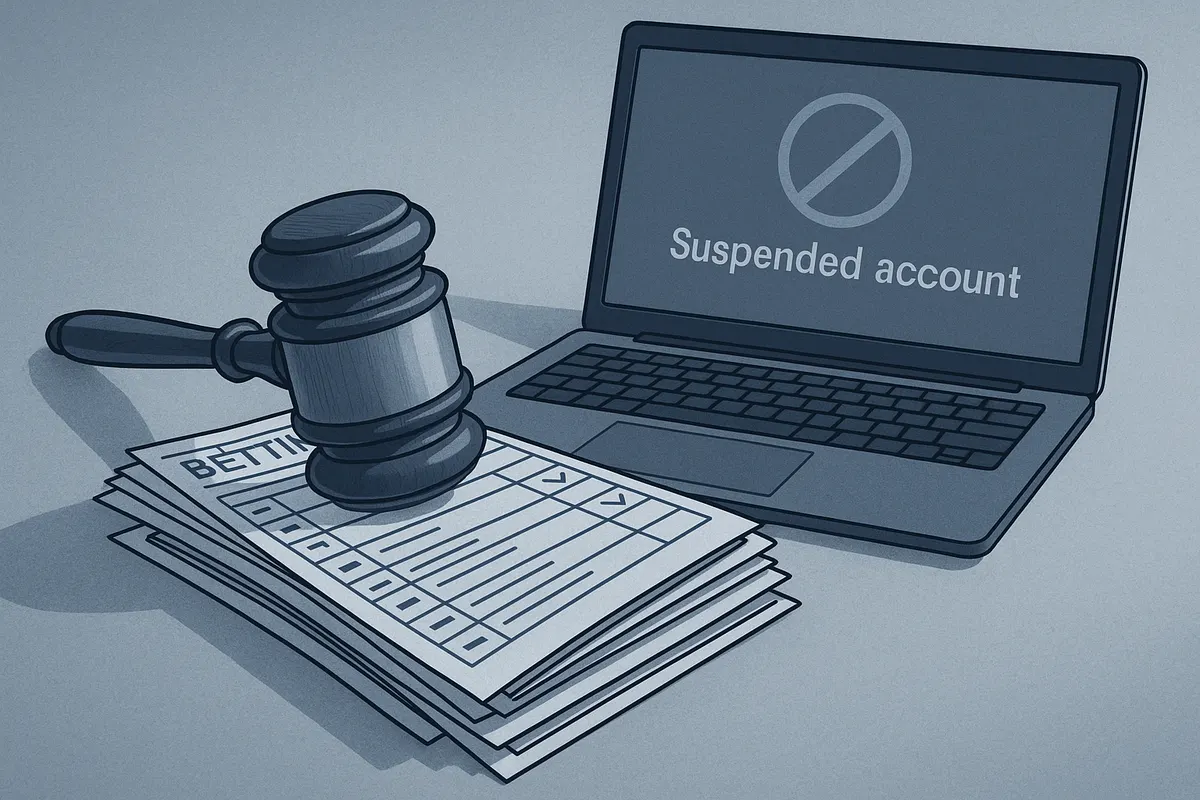
First, the myth: a big fine does not mean the games were rigged
Almost none of the record UK bookmaker penalties handed down in recent years involved tampered odds, manipulated RNG outcomes or stolen player balances. Read the published cases and the pattern is consistent: operators were punished for weak anti money laundering controls and for failing to intervene when customers showed obvious signs of harm. The dice were fair. The compliance around them was not.
That distinction matters, because it tells you what to actually check when you pick a bookmaker. A licensee with a nine figure turnover and a seven figure fine is not usually a cheat. It is a business that let money move without asking questions, and let people lose more than they could afford without picking up the phone.
The league table of UK bookmaker penalties
Here are the largest enforcement outcomes published by the Gambling Commission, by headline amount. Several cover multiple licensed entities inside one corporate group, which is why the totals look so large compared with single-brand cases.
| Operator / group | Amount | Year | Principal failings cited |
|---|---|---|---|
| William Hill group (including WHG International, Mr Green, William Hill Organization) | £19.2m | 2023 | Social responsibility and AML failures across online and retail |
| Entain (online and retail licences) | £17m | 2022 | Social responsibility and AML failures, split between online and shops |
| Caesars Entertainment UK | £13m | 2020 | VIP scheme failings, social responsibility and AML |
| Betway | £11.6m | 2020 | Handling of high-spending customers, source of funds checks |
| 888 UK | £9.4m | 2022 | Social responsibility and AML failures |
| Daub Alderney | £7.1m | 2018 | AML and social responsibility failures |
| In Touch Games | £6.1m | January 2023 | Social responsibility and AML failures |
| Casumo | £6m | 2022 | Social responsibility and AML failures |
Those eight cases alone come to roughly £89m on published figures. Add the long tail of smaller UKGC fines, from mid six figures to a couple of million, and the picture is of enforcement that has become routine rather than exceptional. Betfred, bet365, Spreadex, Videoslots and LeoVegas have all appeared in the Commission’s published actions at lower amounts, which tells you size is no shield and neither is being small.
In Touch Games is worth a second look because it appears twice: a £3.4m fine in 2021, then the £6.1m penalty in January 2023. Repeat findings against the same licensee are exactly what the Commission treats as an aggravating factor.
One more thing the table hides: the two biggest cases, William Hill and Entain, were both group-wide. Regulators stopped treating a brand’s online arm and its shops as separate compliance problems, and started pricing failure at group level.
AML versus safer gambling: which failing costs more?
Nearly every large penalty names both. But they are different failures with different fingerprints, and it is worth separating them.
Anti money laundering breaches
Anti money laundering in betting is about knowing where the stake came from. The recurring findings in UKGC cases are depressingly similar: customers allowed to deposit very large sums with no source of funds evidence; thresholds set so high that almost nobody triggered a check; risk assessments that existed on paper but were not applied to actual accounts; and staff who escalated concerns that then went nowhere.
A typical example from published cases is a customer depositing tens of thousands of pounds over a short period while the only “check” was an unverified claim about their job or income. Under the Money Laundering Regulations and the Commission’s licence conditions, that is a breach regardless of whether the money turned out to be clean.
Responsible gambling failures
Responsible gambling failures are about the customer, not the cash. The Commission’s findings repeatedly describe accounts that showed obvious markers of harm, long overnight sessions, rapid increases in stake size, repeated deposit attempts after declines, chasing losses after a big withdrawal, and an operator whose response was an automated email or a VIP bonus.
The VIP problem is the thread running through the 2020 cases in particular: high-value customers were managed by people whose incentives were tied to how much those customers spent. That conflict is now addressed by specific requirements on high-value customer schemes.
So which costs more? In practice, the penalties cluster. Where only one limb is found, the number tends to be smaller; the headline-grabbing cases are the ones where an operator failed at both, because the regulator reads that as a systemic control failure rather than a few missed accounts. If you want a rough rule: AML findings drive the legal seriousness, responsible gambling findings drive the public and political heat, and together they drive the size.
Penalty, settlement or licence action: the tools compared
“Fine” is shorthand for several different outcomes, and they are not interchangeable. The distinction explains a lot about why reported totals jump around.
| Enforcement tool | What it is | Typical trigger | Effect on the operator |
|---|---|---|---|
| Financial penalty | A fine imposed after a regulatory investigation | Confirmed breaches of licence conditions or the LCCP | Money paid to the Commission, findings published |
| Regulatory settlement | An agreed package, often including payments in lieu of a penalty directed to socially responsible causes | Operator engages early, admits failings, offers remedies | Faster resolution, still published, still reputationally costly |
| Additional licence conditions | Binding extra requirements attached to the operating licence | Specific control weaknesses the regulator wants fixed | Ongoing supervision, independent audits, reporting duties |
| Suspension or revocation | Licence stopped or removed | Severe or repeated operator license breaches, unfit management | Business cannot trade in Great Britain |
| Personal management licence action | Review or removal of a named individual’s licence | Senior accountability for the failings | Named executives can lose the right to hold their role |
The verdict on which tool actually changes behaviour is not the obvious one. Headline cash penalties generate the coverage, but the measures that reshape how a bookmaker treats your account are the additional licence conditions, the mandated independent audits and the threat to personal management licences. A fine is a one-off cost that a large group can absorb. A standing requirement to audit your customer interaction process, with a named director answerable for it, is not.
The Commission has also leaned away from settlements as the default. Settlements were criticised for letting operators negotiate their way to a quieter outcome, and the policy direction has been to reserve them for licensees that come forward early and openly, with straightforward financial penalties elsewhere. That shift is part of why recent numbers look bigger than the older ones.
What this actually changes at your account level
Enforcement does not stay in the boardroom. The failings described in these cases are precisely the ones the industry has since been told to fix, and the fixes land on players.
- Source of funds requests. Deposit or stake at a level the operator flags and you may be asked for payslips, bank statements or tax documents before you can continue or withdraw. This is AML compliance, not a stalling tactic.
- Earlier and blunter interventions. Pop-ups, forced breaks, capped deposits and account restrictions now arrive sooner, and automated nudges alone are no longer accepted as a response to clear markers of harm.
- Tighter KYC before payout. Identity and age verification is front-loaded, which is why an unverified account can deposit but struggle to cash out.
- Restructured VIP schemes. High-value customer programmes now require affordability and harm checks, and the people running them cannot be rewarded purely on customer spend.
- Product-level limits. Following the 2023 gambling white paper, online slot stakes are capped at £5 per spin, and £2 for players aged 18 to 24, alongside work on financial risk assessments.
The friction is real and players complain about it, often fairly. But the alternative is the pre-2020 model, where nobody asked anything until a customer had lost a six figure sum. Read a few of the published case summaries on the Gambling Commission site and the checks look a lot less like bureaucracy.
So is the enforcement working?
Partly, and the honest answer has two halves. On one side, the same failings keep reappearing in new cases, which suggests fines have been absorbed as a cost of trading rather than treated as a deadline. On the other, the direction of travel is unmistakable: group-wide penalties, less appetite for negotiated settlements, named individuals in scope, and the largest UKGC fines sitting at levels that affect reported earnings rather than just a legal provision.
For anyone choosing where to bet, the practical takeaway is narrow but useful. A licensed operator with a published penalty is, oddly, more transparent than an unlicensed site with none, because you can read exactly what it got wrong and what it was told to fix. An offshore book outside the scope of gambling regulation in the UK offers no such record, no mandated interventions and no regulator to complain to. The friction is the protection.
Frequently asked questions
What is the largest UK bookmaker penalty so far?
The £19.2m imposed on the William Hill group of licences in 2023 is the largest published enforcement outcome, covering online and retail operations and citing both social responsibility and AML failings.
Who issues these fines?
The Gambling Commission, which licenses and regulates operators serving Great Britain. It can impose financial penalties, agree regulatory settlements, attach extra licence conditions, and suspend or revoke a licence.
Do players get compensated from the fines?
Not directly. Financial penalties are paid to the Commission and go to the Consolidated Fund; regulatory settlements have historically included payments directed to socially responsible causes. Individual redress is a separate matter handled through the operator’s complaints process and alternative dispute resolution.
Does a fined bookmaker mean my money is unsafe?
A penalty is about control failures, not usually about solvency or game integrity. Customer funds protection is set out in each operator’s terms under its licence, and the protection level is disclosed to you when you register.
Why am I being asked for bank statements?
Because the enforcement cases above repeatedly found operators accepting large deposits without evidence of source of funds. Those requests are now standard once an account crosses an operator’s risk thresholds.
Gambling carries a built-in house edge and loses money over time for players as a group. Set deposit and loss limits, use cool-off or self-exclusion if you need a break, and if gambling is causing you harm, free confidential support is available at BeGambleAware. 18+ only.


Leave a Reply