
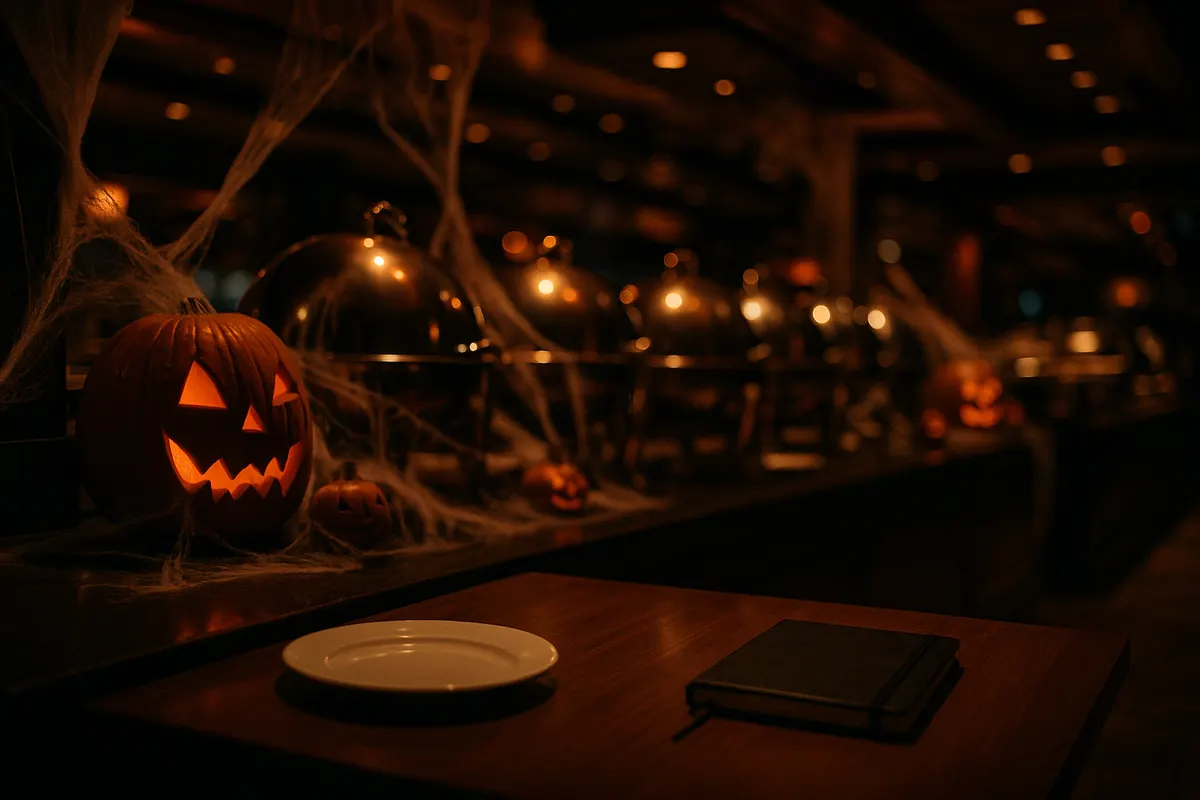
Would you eat your way through a weekend of haunted casino buffets for $5,000?
That is the actual offer. One person will be paid $5,000, with roundtrip flights and a weekend of accommodation covered, to visit and review a shortlist of Las Vegas casino resort buffets that carry ghost stories. The gambling site casino.org announced the vegas halloween buffet job on October 1, 2026, calling the role its “Boo”ffet Inspector, and applications close at 11:59 PM ET on October 31, 2026. The part most people skim past: the winner is picked at random, not hired on merit.
So treat it as a prize draw with a very specific task attached, not a career move. That framing matters, and it explains almost everything about how the promotion is built.
The offer, broken down
The money arrives in two halves. On accepting the prize, the winner receives $2,500 to cover buffet entries, food, drinks, travel inside Las Vegas, flights, and accommodation. The remaining $2,500 is paid once the task is finished and the reviews are delivered. In other words, the first payment is a float for expenses and the second is the fee.
| Detail | What the promotion says |
|---|---|
| Role | “Boo”ffet Inspector, reviewing Vegas casino buffets with reputed spooky stories |
| Total payment | $5,000 (US) |
| Payment structure | $2,500 on acceptance for expenses, $2,500 on completion |
| Covered | Roundtrip travel, weekend accommodation, buffet entries, food and drinks, local travel |
| Selection | At random from valid entries |
| Announced | October 1, 2026 |
| Deadline | 11:59 PM ET, October 31, 2026 |
| Entry rules | One online form per person; duplicate submissions are removed and disqualified |
Full conditions sit on the organiser’s Dream Job page and terms, which is where anyone seriously interested should look before filling in anything, including eligibility by age and residency.
What the work involves (and what it doesn’t)
No ghost hunting. The organiser was explicit about that: no EMF meters, no seances, no creeping down dark hotel corridors. The winner turns up as an ordinary buffet customer, pays the entry, loads a plate, optionally picks an atmospheric corner table, and then writes honestly about whether the food and the setting are any good.
Realistically that means a packed weekend. Several buffets across different resorts in two or three days is a lot of eating, plus notes on price, service, dish quality, range, and the Halloween dressing on top. The “haunted” angle is the hook; the deliverable is restaurant criticism.
Why brands keep inventing dream jobs like this
A $5,000 payout plus travel is a modest marketing budget by any standard, and a stunt like this does several jobs at once:
- Earned attention. “Get paid to eat Vegas buffets” is a headline that travels on its own. Coverage and social sharing cost the brand nothing extra.
- Email and audience capture. Entries come through a form. Every applicant is a contactable, self-identified fan of Vegas trips, food, and casino content.
- Seasonal timing. Launching on October 1 and closing on Halloween gives the campaign a natural month-long run with a built-in deadline that pushes last-minute entries.
- Content it can publish later. The reviews become a follow-up article, which keeps the campaign earning long after October.
- Legal simplicity. Picking at random makes it a promotional giveaway rather than a recruitment process, which is far cleaner to run than judging thousands of applicants on talent.
That last point is worth repeating, because the word “job” does a lot of heavy lifting in these campaigns. You are not competing on your food writing. You are entering a draw.
What it says about Vegas buffets and festive hospitality
The all-you-can-eat buffet used to be Las Vegas shorthand for cheap volume: fill the room, keep people on property, send them back to the floor. That model thinned out considerably after 2020, when several long-running buffets shut and some never came back. The ones still trading lean harder on theme, occasion, and seasonal pricing than on sheer cheapness.
Halloween casino promotions fit that shift neatly. October gives resorts a reason to redress a dining room, add a limited menu, and charge an event price for something guests will photograph. A promotion built around “spooky buffets” works precisely because the properties have already done the decorating. The stunt is riding a trend, not creating one.
The practical takeaway for anyone planning a festive trip: seasonal food and drink offers in Vegas are marketing instruments, same as a free-play coupon or a resort credit. Themed buffets often carry a premium over the standard weekday rate, weekend seatings get booked up, and the value sits in whether you actually want the experience, not in the “all you can eat” label. Check the price for your specific date rather than the headline rate.
Before you enter
- Read the terms. Eligibility, age, residency, and what counts as completing the task are all defined there, not in the headline.
- Enter once. Duplicates are stripped out and disqualified, so a flood of submissions actively hurts you.
- Budget the float carefully. The first $2,500 is meant to cover flights, hotel, buffet entries, and local transport. A Halloween weekend in Las Vegas is not a cheap one.
- Treat the money as prize income. Promotional winnings generally have tax consequences; check with a qualified tax professional for your own situation rather than guessing.
- Mind the clock. The cutoff is 11:59 PM ET on October 31, 2026, so entries close late on Halloween night. Check the time zone against your own before leaving it to the last hour.
One honest note on odds: a random draw with a single winner and viral reach means your individual chance is small, whatever your appetite. Enter for the fun of it, keep any Vegas trip you’re planning on its own budget, and if you gamble while you’re there, set a deposit or loss limit first and stick to it. The buffet is the only part of the weekend with a guaranteed return.


Leave a Reply